

Breadcrumb
Newsletter - Spotlighting Our Faculty, Staff, and Students - February 2024
Megan Watson
Cal Poly Humboldt's new NAGPRA Program Coordinator
Interview by: Alina Ferguson, Anthropolgy and Journalism student
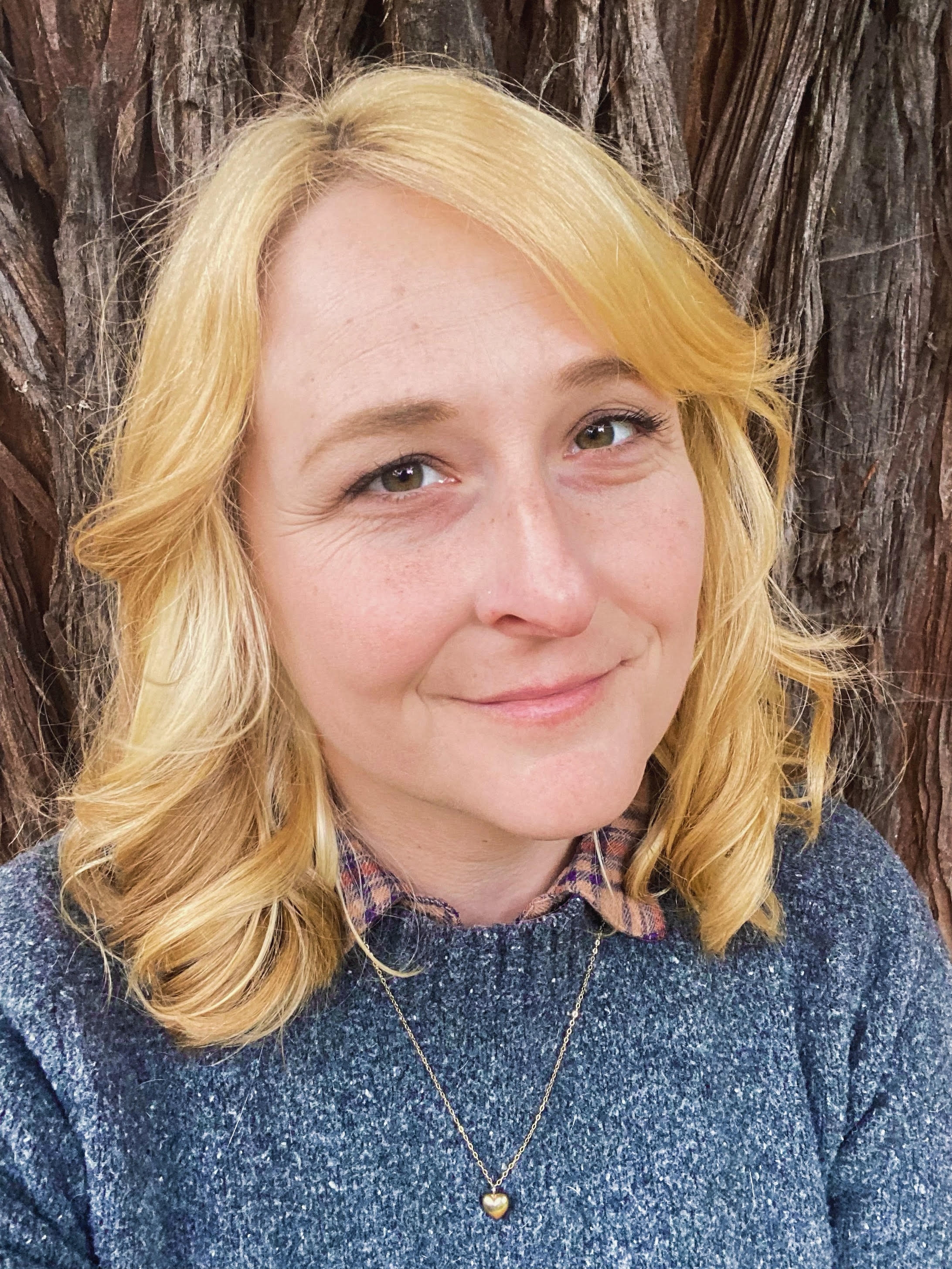
Just last week, I sat down with Megan to find out a bit more about what brought her to Cal Poly Humboldt.
Q: Hi Megan, Welcome to Humboldt! What is your educational background?
A: Thank you Alina. Well, I got my Bachelor’s degree at San Francisco State University in Anthropology. My time at San Francisco State was great; I interned at the NAGPRA lab there. So I think that was a very big influence on me and my career overall.
Q: Are you from San Francisco?
A: I’m from the Bay Area. I’m actually from a town called Antioch. It's kind of on the Delta. San Francisco State is over the bay there. So it’s just kind of the natural place to go.
Q: So what brought you to Humboldt to do your job here? Why Humboldt?
A: Well, first and foremost I’d been looking for NAGPRA jobs for a few years. I interned for NAGPRA at SF State, I absolutely loved working there, it was a really eye-opening experience for me and it definitely shaped my career. I’d been looking to get back into that for a while, and I saw this job posting for Humboldt. Humboldt is such a beautiful place to live and I kind of wanted a change from the Bay Area. This definitely seemed like it would be a pretty big change. I’m very pleased; lots of trees, very different, less traffic, it just seemed like a win-win, it was like “Oh, dream job and this wonderful beautiful place to live, why wouldn’t I?”
Q: What kind of things do you like to do in Humboldt, that maybe you couldn’t do in the city?
A: I think just being able to go into nature and not be completely overwhelmed with crowds. There is a lovely redwood park in Oakland, but there are a hundred people there at any given moment, you can never really get any peace and quiet. I think that was a huge reason why I moved here, just to be able to be in nature and not be in a crowd at the same time. Here it’s nice open spaces, fresh air. I really enjoy gardening, and hiking with my two dogs.
Q: What did you do before you came to Cal Poly Humboldt?
A: For the past twelve years I have been working as an archaeologist in Cultural Resource Management (CRM). For the first half of my career, I was mostly in the field, on construction sites, monitoring, just keeping an eye out for anything that might come out of the ground. But then in the second part of my career, I sat behind my desk and wrote environmental documents. Basically checking off the boxes, saying, yes we looked here, we didn’t see anything, or oh, this particular soil formation is a little more sensitive and you should probably be careful if you dig there. So the second half has been tons of very lengthy dry documents, which are super important, because it's the regulations and it’s what keeps us from destroying sites.
Q: Have your previous jobs required you to travel?
A: When I was doing my undergrad, I took a field school in New Mexico and that was really fun. I have been able to go back to New Mexico a couple of times for work, so that has been really cool. And then I have done a lot of traveling in California. California is probably one of the prettiest states out there. I know a lot of archaeologists do overseas studies or research but I really focused on California mostly. Partially that was because I grew up here and partially because I felt like there was a need here in California, for people who specialize in California history and archaeology.
Q: Your offical tile is Native American Grave Protection and Repatriation (NAGPRA) Program Coordinator. Tell me more about NAGPRA.
A: NAGPRA stands for “Native American Graves Protection and Repatriation Act.” It is a federal law that went into effect in 1990. Basically any institution that receives federal funding is responsible for repatriating human remains and cultural items to Native American Tribes. That has been a law since 1990 but the process really hasn’t been expedited since that time. In California in 2001, they came up with a new law, called CALNAGPRA and that was kind of to push the repatriation process through. Alina, can you insert a link into this dialogue for those who want to learn more about NAGPRA?
Q: Absolutely! Here is a link to the NAGPRA information page on the College website. This is the final question, in one sentence, what does a NAGPRA Program Coordinator do?
A: So basically my job here at Humboldt is going to be to take a look at the cultural items that we have and then work with the Tribes to return these items.
Thank you Megan and welcome to Cal Poly Humboldt!
Kyleigh Brine
Dance, Music & Theatre
Professor Kyleigh Brine was selected to perform in the Selah Dance Concert in Santa Barbara, California, where she presented an excerpt from her new choreographic work, Holding Things. The work is inspired by Maira Kalman’s book Women Holding Things and explores the physical and emotional ways we carry, hold, and move through the things that shape our lives. The performance provided an opportunity to share emerging creative research and new choreography with a broader dance community beyond Cal Poly Humboldt.
Gabi Kirk, Levi Humphrey, Zachary Knight, Liam Blackburn, Sterling Russell, and Corra Houtermans
Geography, Environment & Spatial Analysis
Levi Humphrey (GESA '25), Zachary Knight (GESA '26), Liam Blackburn (GESA '26), Sterling Russell (GESA/Religious Studies '26), and Corra Houtermans (ENST '26) with Professor Gabi Kirk (GESA) published "People's Guides to California" in you are here: the journal of creative geography based at University of Arizona. The 2026 issue is themed "Weaving Alter-Worlds" and "explores the act of weaving as a metaphor for crafting interconnected futures that resist colonial domination and hegemonic space." This student-faculty piece explores lesser-known histories and presents of California through Indigenous geography, Black history, and other cultural geographies through creative methods including maps, zines, and even a board game. The publication is on display in front of Founders Hall 109 or can be purchased at the journal's website.
Josh Meisel
Sociology
Domestic cannabis cultivation has become widespread internationally yet little is known about the methods, motives, and experiences of small-scale growers. In collaboration with the Global Cannabis Cultivation Research Consortium, Dr. Josh Meisel surveyed predominately small-scale cannabis growers in 18 countries about their use of cannabis and other drugs; cannabis growing experience; methods and scale of growing operations; reasons for growing cannabis; participation in cannabis and other drug markets; contacts with the criminal justice system in relation to cannabis growing; involvement in other (non-drug-related) criminal activity; and demographic characteristics. One paper resulting from this research, "Small-Scale Cannabis Cultivation, Use, and Supply in Eighteen Countries: Methods, Motives, and Experiences" was published in the July 2026 issue of Contemporary Drug Problems.
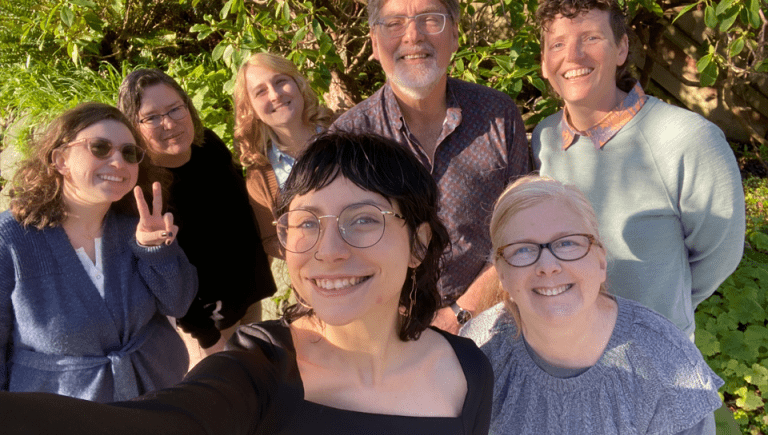
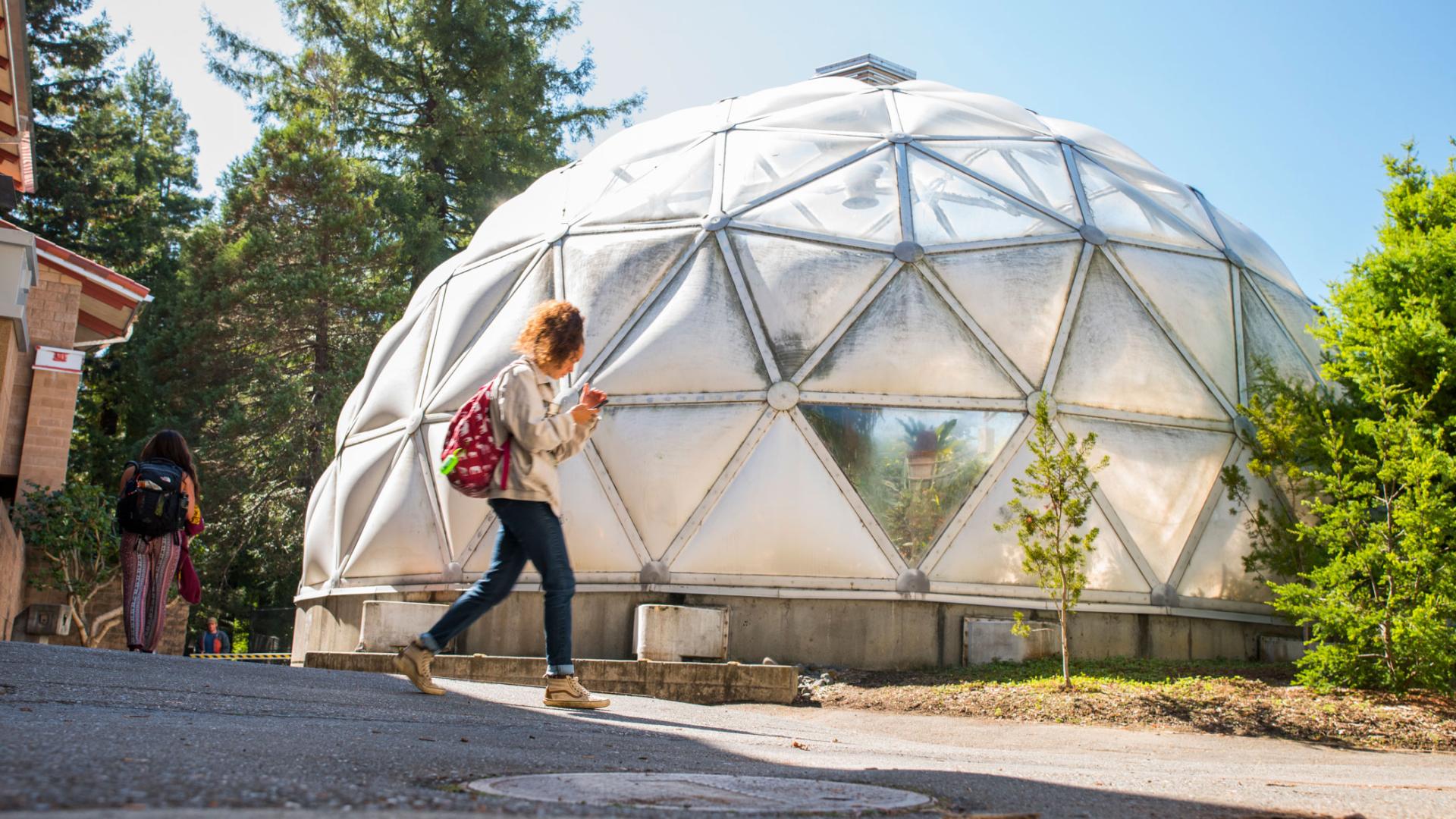
The Dean's Office enjoying a sunny day in Humboldt!
Mark your Calendar! Current and Upcoming Exhibits in the Campus Galleries
Lora Webb Nichols: Photographs Made, Photographs Collected
Curated by Nicole Jean Hill
Wa Hinthil Come North
Group Exhibition curated by Meyo Marrufo, Eastern Pomo
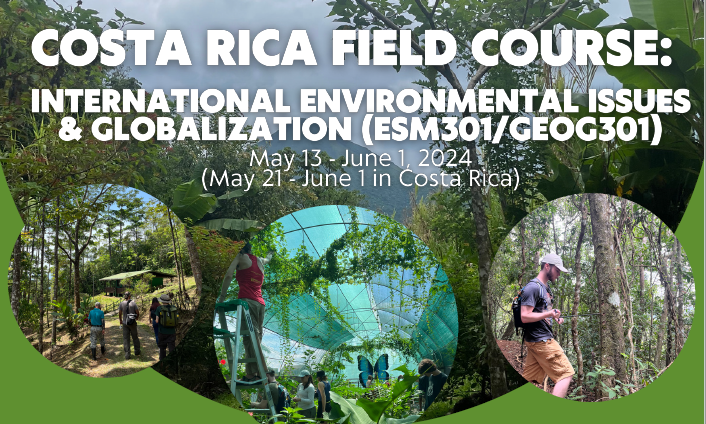
Field Course >>> Click on the flyer to learn more <<<
Past Issues
Follow Us on Social Media
Facebook: Cal Poly Humboldt College of Arts, Humanities, and Social Sciences
Facebook: Cal Poly Humboldt CAHSS Graduate Programs
Instagram: calpolyhumboldtcahss
Click Here >>> Send us your newsletter ideas!